SRV6 Source Routing with Linux
SRv6 Source Routing with Linux
A quick overview of SRv6 forwarding
For a great explanation of how SRv6 forwarding works, have a look at the Segment Routing v6 presentation.
I cross-referenced it regularly while working on this blog post. Another great reference is SRv6 in the Linux kernel.
In short, the sender of a packet that wishes to use SRv6 Source Routing will have a special route requesting SRv6 encapsulation via encap seg6.
In our lab, we configure the following routes on host1 and host4, respectively.
| ip route add fd02:0:4::1 encap seg6 mode inline segs fd02:0:2::10,fd02:0:6::10,fd02:0:3::10,fd02:0:5::10 dev tohost2
|
| ip route add fd02:0:1::1 encap seg6 mode inline segs fd02:0:3::10,fd02:0:6::10 dev tohost3
|
These routes set the mode to inline, meaning the payload directly follows the Segment Routing Header (SRH). In other scenarios, such as tunneling, the mode can be set to encap or encap.red and the SRH will be followed by an inner IP or IPv6 header.
The list of segments, e.g., segs fd02:0:2::10,fd02:0:6::10,fd02:0:3::10,fd02:0:5::10, will appear in the Segment Routing Header (ordered from last to first).
The SRH holds a pointer into the list of segments (called the Segments Left field) marking the current destination. At each hop, the Segments Left field is decreased by one, and the address pointed to
by Segments Left is copied into the IPv6 Destination address. The entire SRH with the list of all segments will be maintained until the SRH is popped off, in our case - due to flavors psp - by the penultimate hop (the node just before the destination). A node identifies itself as the penultimate hop when its Segments Left is 1.
Not all nodes in a network have to be SRv6 enabled. These transit nodes forward the IPv6 packet according to the IPv6 destination address and ignore the SRH.
Lab setup
We use containerlab to set up the following 6 node topology.
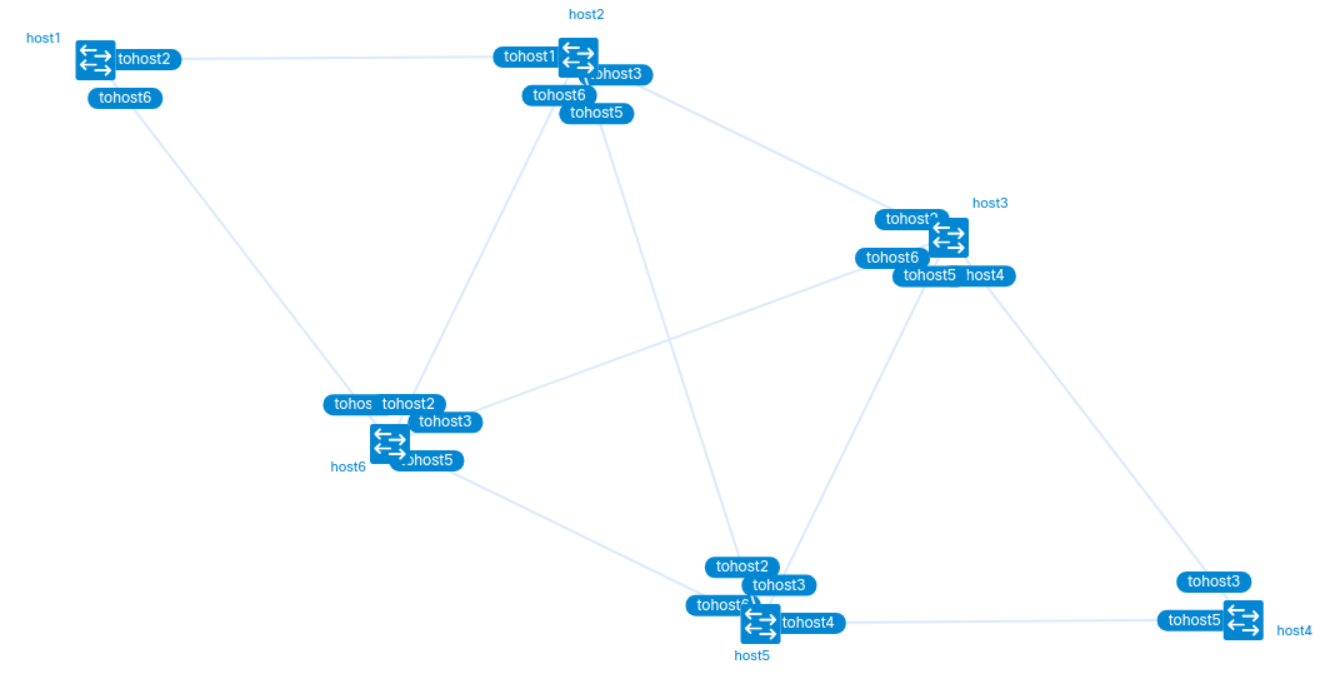
Create a new directory, and add file source-routing.clab.yml with the following content.
  1
  2
  3
  4
  5
  6
  7
  8
  9
 10
 11
 12
 13
 14
 15
 16
 17
 18
 19
 20
 21
 22
 23
 24
 25
 26
 27
 28
 29
 30
 31
 32
 33
 34
 35
 36
 37
 38
 39
 40
 41
 42
 43
 44
 45
 46
 47
 48
 49
 50
 51
 52
 53
 54
 55
 56
 57
 58
 59
 60
 61
 62
 63
 64
 65
 66
 67
 68
 69
 70
 71
 72
 73
 74
 75
 76
 77
 78
 79
 80
 81
 82
 83
 84
 85
 86
 87
 88
 89
 90
 91
 92
 93
 94
 95
 96
 97
 98
 99
100
101
102
103
104
105
106
107
108
109
110
111
112
113
114
115
116
117
118
119
120
121
122
123
124
125
126
127
128
129
130
131
132
133 | name: source-routing
topology:
groups:
fedora:
kind: linux
image: nicolaka/netshoot
exec:
- ip route delete default
- ip -6 route delete default
- sysctl -w net.ipv4.ip_forward=1
- sysctl -w net.ipv6.conf.all.forwarding=1
- sysctl -w net.ipv6.seg6_flowlabel=1
- sysctl -w net.ipv6.conf.all.seg6_enabled=1
nodes:
host1:
group: fedora
exec:
- ip addr add fd02:0:1::1/128 dev lo
- ip addr add 2001:db8:1:2::1/64 dev tohost2
- ip addr add 2001:db8:1:6::1/64 dev tohost6
- ip route add fd02:0:2::/48 via 2001:db8:1:2::2
- ip route add fd02:0:3::/48 via 2001:db8:1:2::2
- ip route add fd02:0:4::/48 via 2001:db8:1:2::2
- ip route add fd02:0:5::/48 via 2001:db8:1:6::6
- ip route add fd02:0:6::/48 via 2001:db8:1:6::6
- ip link add dummy0 type dummy
- ip link set dev dummy0 up
- ip route add fd02:0:1::10/128 encap seg6local action End flavors psp count dev dummy0
- ip route add fd02:0:4::1 encap seg6 mode inline segs fd02:0:2::10,fd02:0:6::10,fd02:0:3::10,fd02:0:5::10 dev tohost2
# ping -c1 -W1 -I fd02:0:1::1 fd02:0:4::1
host2:
group: fedora
exec:
- ip addr add fd02:0:2::1/128 dev lo
- ip addr add 2001:db8:1:2::2/64 dev tohost1
- ip addr add 2001:db8:2:3::2/64 dev tohost3
- ip addr add 2001:db8:2:5::2/64 dev tohost5
- ip addr add 2001:db8:2:6::2/64 dev tohost6
- ip route add fd02:0:1::/48 via 2001:db8:1:2::1
- ip route add fd02:0:3::/48 via 2001:db8:2:3::3
- ip route add fd02:0:4::/48 via 2001:db8:2:3::3
- ip route add fd02:0:5::/48 via 2001:db8:2:5::5
- ip route add fd02:0:6::/48 via 2001:db8:2:6::6
- ip link add dummy0 type dummy
- ip link set dev dummy0 up
- ip route add fd02:0:2::10/128 encap seg6local action End flavors psp count dev dummy0
host3:
group: fedora
exec:
- ip addr add fd02:0:3::1/128 dev lo
- ip addr add 2001:db8:2:3::3/64 dev tohost2
- ip addr add 2001:db8:3:4::3/64 dev tohost4
- ip addr add 2001:db8:3:5::3/64 dev tohost5
- ip addr add 2001:db8:3:6::3/64 dev tohost6
- ip route add fd02:0:1::/48 via 2001:db8:2:3::2
- ip route add fd02:0:2::/48 via 2001:db8:2:3::2
- ip route add fd02:0:4::/48 via 2001:db8:3:4::4
- ip route add fd02:0:5::/48 via 2001:db8:3:5::5
- ip route add fd02:0:6::/48 via 2001:db8:3:6::6
- ip link add dummy0 type dummy
- ip link set dev dummy0 up
- ip route add fd02:0:3::10/128 encap seg6local action End flavors psp count dev dummy0
host4:
group: fedora
exec:
- ip addr add fd02:0:4::1/128 dev lo
- ip addr add 2001:db8:3:4::4/64 dev tohost3
- ip addr add 2001:db8:4:5::4/64 dev tohost5
- ip route add fd02:0:1::/48 via 2001:db8:3:4::3
- ip route add fd02:0:2::/48 via 2001:db8:3:4::3
- ip route add fd02:0:3::/48 via 2001:db8:3:4::3
- ip route add fd02:0:5::/48 via 2001:db8:4:5::5
- ip route add fd02:0:6::/48 via 2001:db8:4:5::5
- ip link add dummy0 type dummy
- ip link set dev dummy0 up
- ip route add fd02:0:4::10/128 encap seg6local action End flavors psp count dev dummy0
- ip route add fd02:0:1::1 encap seg6 mode inline segs fd02:0:3::10,fd02:0:6::10 dev tohost3
host5:
group: fedora
exec:
- ip addr add fd02:0:5::1/128 dev lo
- ip addr add 2001:db8:2:5::5/64 dev tohost2
- ip addr add 2001:db8:3:5::5/64 dev tohost3
- ip addr add 2001:db8:4:5::5/64 dev tohost4
- ip addr add 2001:db8:5:6::5/64 dev tohost6
- ip route add fd02:0:1::/48 via 2001:db8:5:6::6
- ip route add fd02:0:2::/48 via 2001:db8:2:5::2
- ip route add fd02:0:3::/48 via 2001:db8:3:5::3
- ip route add fd02:0:4::/48 via 2001:db8:4:5::4
- ip route add fd02:0:6::/48 via 2001:db8:5:6::6
- ip link add dummy0 type dummy
- ip link set dev dummy0 up
- ip route add fd02:0:5::10/128 encap seg6local action End flavors psp count dev dummy0
host6:
group: fedora
exec:
- ip addr add fd02:0:6::1/128 dev lo
- ip addr add 2001:db8:1:6::6/64 dev tohost1
- ip addr add 2001:db8:2:6::6/64 dev tohost2
- ip addr add 2001:db8:3:6::6/64 dev tohost3
- ip addr add 2001:db8:5:6::6/64 dev tohost5
- ip route add fd02:0:1::/48 via 2001:db8:1:6::1
- ip route add fd02:0:2::/48 via 2001:db8:2:6::2
- ip route add fd02:0:3::/48 via 2001:db8:3:6::3
- ip route add fd02:0:4::/48 via 2001:db8:5:6::5
- ip route add fd02:0:5::/48 via 2001:db8:5:6::5
- ip link add dummy0 type dummy
- ip link set dev dummy0 up
- ip route add fd02:0:6::10/128 encap seg6local action End flavors psp count dev dummy0
links:
- endpoints: ["host1:tohost2", "host2:tohost1"] # 2001:db8:1:2::/64
mtu: 1500
- endpoints: ["host1:tohost6", "host6:tohost1"] # 2001:db8:1:6::/64
mtu: 1500
- endpoints: ["host2:tohost3", "host3:tohost2"] # 2001:db8:2:3::/64
mtu: 1500
- endpoints: ["host2:tohost5", "host5:tohost2"] # 2001:db8:2:5::/64
mtu: 1500
- endpoints: ["host2:tohost6", "host6:tohost2"] # 2001:db8:2:6::/64
mtu: 1500
- endpoints: ["host3:tohost4", "host4:tohost3"] # 2001:db8:3:4::/64
mtu: 1500
- endpoints: ["host3:tohost5", "host5:tohost3"] # 2001:db8:3:5::/64
mtu: 1500
- endpoints: ["host3:tohost6", "host6:tohost3"] # 2001:db8:3:6::/64
mtu: 1500
- endpoints: ["host4:tohost5", "host5:tohost4"] # 2001:db8:4:5::/64
mtu: 1500
- endpoints: ["host5:tohost6", "host6:tohost5"] # 2001:db8:5:6::/64
mtu: 1500
|
The routes of type fd02:0:${hostID}::/48 route packets within this CIDR to each host with the corresponding hostID.
The lab does not use any IGP on purpose. I wanted to abstract away as much as possible and focus on the configuration of the datapath, only.
Each node is configured with a loopback address of fd02:0:${hostID}::1/128. Routing only works between loopbacks, we must therefore specify the source address, e.g. ping -c1 -W1 -I fd02:0:1::1 fd02:0:2::1.
Now, let's deploy the lab:
Once we are done, we can tear down the lab with:
SRv6 in our lab
Have another look at file source-routing.clab.yml.
We configure each host as a potential SRv6 Endpoint seg6local action End. Therefore, each host must be configured for IPv6 forwarding and seg6 processing:
| sysctl -w net.ipv6.conf.all.forwarding=1
sysctl -w net.ipv6.seg6_flowlabel=1
sysctl -w net.ipv6.conf.all.seg6_enabled=1
|
And each host will have the following route (where ${hostID} is the ID of the host, 1 through 6) that triggers SRv6 Endoint forwarding via action End with the psp flavor.
| ip link add dummy0 type dummy
ip link set dev dummy0 up
ip route add fd02:0:${hostID}::10/128 encap seg6local action End flavors psp count dev dummy0
|
Note: encap seg6local requires that the route point to some device, or iproute2 will refuse the route. In our specific case, it does not matter which device, as long as it is up. Therefore, we add a dummy0 interface to each host and use that one as the destination device. Packet forwarding will still happen according to the actual IPv6 destination of the packet.
The iproute2 man page explains how encap action End works.
1
2
3
4
5
6
7
8
9
10
11
12
13
14
15
16
17
18
19
20
21
22
23
24
25
26 | seg6local
SEG6_ACTION [ SEG6_ACTION_PARAM ] [ count
] - Operation to perform on matching
packets. The optional count attribute is
used to collect statistics on the
processing of actions. Three counters are
implemented: 1) packets correctly
processed; 2) bytes correctly processed;
3) packets that cause a processing error
(i.e., missing SID List, wrong SID List,
etc). To retrieve the counters related to
an action use the -s flag in the show
command. The following actions are
currently supported (Linux 4.14+ only).
End [ flavors FLAVORS ] - Regular SRv6
processing as intermediate segment
endpoint. This action only accepts
packets with a non-zero Segments Left
value. Other matching packets are
dropped. The presence of flavors can
change the regular processing of an End
behavior according to the user-provided
Flavor operations and information
carried in the packet. See Flavors
parameters section.
|
It also provides a good explanation of flavors psp which is responsible for penultimate Segment Pop operations.
1
2
3
4
5
6
7
8
9
10
11
12 | psp - The Penultimate Segment Pop
(PSP) copies the last SID from the SID
List (carried by the outermost SRH)
into the IPv6 Destination Address (DA)
and removes (i.e. pops) the SRH from
the IPv6 header. The PSP operation
takes place only at a penultimate SR
Segment Endpoint node (e.g., the
Segment Left must be one) and does not
happen at non-penultimate endpoint
nodes. This flavor is currently only
supported by End behavior.
|
Don't worry - once we have a look at the actual datapath and packet captures, you can come back to these sections in the man pages and they will make
a lot more sense.
I already mentioned it in the earlier section, but for completeness:
in our lab, we configure the following routes on host1 and host4, respectively, to describe the Source Routing path for the packets between these 2 hosts.
| ip route add fd02:0:4::1 encap seg6 mode inline segs fd02:0:2::10,fd02:0:6::10,fd02:0:3::10,fd02:0:5::10 dev tohost2
|
| ip route add fd02:0:1::1 encap seg6 mode inline segs fd02:0:3::10,fd02:0:6::10 dev tohost3
|
Analysis of SRv6 traffic
Now, start packet captures on each host:
| i=1; docker exec -it clab-source-routing-host${i} tcpdump -i any -w host${i}.pcap
i=2; docker exec -it clab-source-routing-host${i} tcpdump -i any -w host${i}.pcap
...
i=6; docker exec -it clab-source-routing-host${i} tcpdump -i any -w host${i}.pcap
|
Connect to host1 and ping host4 from there:
| # docker exec -it clab-source-routing-host1 /bin/bash
host1:~# ping -c1 -W1 -I fd02:0:1::1 fd02:0:4::1
PING fd02:0:4::1 (fd02:0:4::1) from fd02:0:1::1 : 56 data bytes
64 bytes from fd02:0:4::1: icmp_seq=1 ttl=62 time=0.309 ms
--- fd02:0:4::1 ping statistics ---
1 packets transmitted, 1 received, 0% packet loss, time 0ms
rtt min/avg/max/mdev = 0.309/0.309/0.309/0.000 ms
|
Kill the packet captures and copy the .pcap files to your local system:
| for i in {1..6}; do docker cp clab-source-routing-host${i}:/root/host$i.pcap host$i.pcap; done
|
Thanks to the SRv6 routes, the ICMP echo request should follow the path from host1 to host4 via host2, host6, host3 and host5.
Whereas the return ICMP echo reply should leave host4 with host1 as its final destination, travelling via host3 and host6.
The ICMPv6 echo request packet leaves host1. Because we set encap seg6 mode to inline, the ICMPv6 payload directly follows the Source Routing Header (SRH), without additional encapsulation.
The SRH shows the list of addresses to visit, in reverse order. Segments Left: 4, and Last Entry: 4 can be interpreted as pointers into the list of addresses.
Address[Last Entry] is the first hop to visit. Address[Segments Left] is the current hop and should be the same as the IPv6 Destination. Address[0] is the final destination of our packet.
 1
 2
 3
 4
 5
 6
 7
 8
 9
10
11
12
13
14
15
16
17
18
19
20
21
22
23
24
25
26
27
28
29
30
31
32
33
34
35
36
37
38
39
40
41
42
43 | $ tshark -r host1.pcap -O ipv6 frame.number==3
Frame 3: Packet, 212 bytes on wire (1696 bits), 212 bytes captured (1696 bits)
Linux cooked capture v2
Internet Protocol Version 6, Src: fd02:0:1::1, Dst: fd02:0:2::10
0110 .... = Version: 6
.... 0000 0000 .... .... .... .... .... = Traffic Class: 0x00 (DSCP: CS0, ECN: Not-ECT)
.... 0000 00.. .... .... .... .... .... = Differentiated Services Codepoint: Default (0)
.... .... ..00 .... .... .... .... .... = Explicit Congestion Notification: Not ECN-Capable Transport (0)
.... 0000 1100 0010 1010 1110 = Flow Label: 0x0c2ae
Payload Length: 152
Next Header: Routing Header for IPv6 (43)
Hop Limit: 64
Source Address: fd02:0:1::1
[Address Space: Unique Local Unicast]
[Special-Purpose Allocation: Unique-Local]
[Source: True]
[Destination: True]
[Forwardable: True]
[Reserved-by-Protocol: False]
Destination Address: fd02:0:2::10
[Address Space: Unique Local Unicast]
[Special-Purpose Allocation: Unique-Local]
[Source: True]
[Destination: True]
[Forwardable: True]
[Reserved-by-Protocol: False]
[Stream index: 2]
Routing Header for IPv6 (Segment Routing)
Next Header: ICMPv6 (58)
Length: 10
[Length: 88 bytes]
Type: Segment Routing (4)
Segments Left: 4
Last Entry: 4
Flags: 0x00
Tag: 0000
Address[0]: fd02:0:4::1
Address[1]: fd02:0:5::10
Address[2]: fd02:0:3::10
Address[3]: fd02:0:6::10
Address[4]: fd02:0:2::10
Internet Control Message Protocol v6
HiPerConTracer Trace Service
|
The packet is processed on host2, where the Hop Limit and Segments Left are decreased by 1. The IPv6 Destination is changed to Address[Segments Left], and the packet is forwarded to the next hop.
 1
 2
 3
 4
 5
 6
 7
 8
 9
10
11
12
13
14
15
16
17
18
19
20
21
22
23
24
25
26
27
28
29
30
31
32
33
34
35
36
37
38
39
40
41
42
43 | $ tshark -r host2.pcap -O ipv6 frame.number==6
Frame 6: Packet, 212 bytes on wire (1696 bits), 212 bytes captured (1696 bits)
Linux cooked capture v2
Internet Protocol Version 6, Src: fd02:0:1::1, Dst: fd02:0:6::10
0110 .... = Version: 6
.... 0000 0000 .... .... .... .... .... = Traffic Class: 0x00 (DSCP: CS0, ECN: Not-ECT)
.... 0000 00.. .... .... .... .... .... = Differentiated Services Codepoint: Default (0)
.... .... ..00 .... .... .... .... .... = Explicit Congestion Notification: Not ECN-Capable Transport (0)
.... 0000 1100 0010 1010 1110 = Flow Label: 0x0c2ae
Payload Length: 152
Next Header: Routing Header for IPv6 (43)
Hop Limit: 63
Source Address: fd02:0:1::1
[Address Space: Unique Local Unicast]
[Special-Purpose Allocation: Unique-Local]
[Source: True]
[Destination: True]
[Forwardable: True]
[Reserved-by-Protocol: False]
Destination Address: fd02:0:6::10
[Address Space: Unique Local Unicast]
[Special-Purpose Allocation: Unique-Local]
[Source: True]
[Destination: True]
[Forwardable: True]
[Reserved-by-Protocol: False]
[Stream index: 5]
Routing Header for IPv6 (Segment Routing)
Next Header: ICMPv6 (58)
Length: 10
[Length: 88 bytes]
Type: Segment Routing (4)
Segments Left: 3
Last Entry: 4
Flags: 0x00
Tag: 0000
Address[0]: fd02:0:4::1
Address[1]: fd02:0:5::10
Address[2]: fd02:0:3::10
Address[3]: fd02:0:6::10
Address[4]: fd02:0:2::10
Internet Control Message Protocol v6
HiPerConTracer Trace Service
|
The packet next arrives on host6 where the same forwarding process continues.
1
2
3
4
5
6
7
8
9
10
11
12
13
14
15
16
17
18
19
20
21
22
23
24
25
26
27
28
29
30
31
32
33
34
35
36
37
38
39
40
41
42
43 | $ tshark -r host6.pcap -O ipv6 frame.number==6
Frame 6: Packet, 212 bytes on wire (1696 bits), 212 bytes captured (1696 bits)
Linux cooked capture v2
Internet Protocol Version 6, Src: fd02:0:1::1, Dst: fd02:0:3::10
0110 .... = Version: 6
.... 0000 0000 .... .... .... .... .... = Traffic Class: 0x00 (DSCP: CS0, ECN: Not-ECT)
.... 0000 00.. .... .... .... .... .... = Differentiated Services Codepoint: Default (0)
.... .... ..00 .... .... .... .... .... = Explicit Congestion Notification: Not ECN-Capable Transport (0)
.... 0000 1100 0010 1010 1110 = Flow Label: 0x0c2ae
Payload Length: 152
Next Header: Routing Header for IPv6 (43)
Hop Limit: 62
Source Address: fd02:0:1::1
[Address Space: Unique Local Unicast]
[Special-Purpose Allocation: Unique-Local]
[Source: True]
[Destination: True]
[Forwardable: True]
[Reserved-by-Protocol: False]
Destination Address: fd02:0:3::10
[Address Space: Unique Local Unicast]
[Special-Purpose Allocation: Unique-Local]
[Source: True]
[Destination: True]
[Forwardable: True]
[Reserved-by-Protocol: False]
[Stream index: 5]
Routing Header for IPv6 (Segment Routing)
Next Header: ICMPv6 (58)
Length: 10
[Length: 88 bytes]
Type: Segment Routing (4)
Segments Left: 2
Last Entry: 4
Flags: 0x00
Tag: 0000
Address[0]: fd02:0:4::1
Address[1]: fd02:0:5::10
Address[2]: fd02:0:3::10
Address[3]: fd02:0:6::10
Address[4]: fd02:0:2::10
Internet Control Message Protocol v6
HiPerConTracer Trace Service
|
The packet next hits host3 where the packet is processed just as before and is forwarded to host5.
1
2
3
4
5
6
7
8
9
10
11
12
13
14
15
16
17
18
19
20
21
22
23
24
25
26
27
28
29
30
31
32
33
34
35
36
37
38
39
40
41
42
43 | $ tshark -r host3.pcap -O ipv6 frame.number==6
Frame 6: Packet, 212 bytes on wire (1696 bits), 212 bytes captured (1696 bits)
Linux cooked capture v2
Internet Protocol Version 6, Src: fd02:0:1::1, Dst: fd02:0:5::10
0110 .... = Version: 6
.... 0000 0000 .... .... .... .... .... = Traffic Class: 0x00 (DSCP: CS0, ECN: Not-ECT)
.... 0000 00.. .... .... .... .... .... = Differentiated Services Codepoint: Default (0)
.... .... ..00 .... .... .... .... .... = Explicit Congestion Notification: Not ECN-Capable Transport (0)
.... 0000 1100 0010 1010 1110 = Flow Label: 0x0c2ae
Payload Length: 152
Next Header: Routing Header for IPv6 (43)
Hop Limit: 61
Source Address: fd02:0:1::1
[Address Space: Unique Local Unicast]
[Special-Purpose Allocation: Unique-Local]
[Source: True]
[Destination: True]
[Forwardable: True]
[Reserved-by-Protocol: False]
Destination Address: fd02:0:5::10
[Address Space: Unique Local Unicast]
[Special-Purpose Allocation: Unique-Local]
[Source: True]
[Destination: True]
[Forwardable: True]
[Reserved-by-Protocol: False]
[Stream index: 5]
Routing Header for IPv6 (Segment Routing)
Next Header: ICMPv6 (58)
Length: 10
[Length: 88 bytes]
Type: Segment Routing (4)
Segments Left: 1
Last Entry: 4
Flags: 0x00
Tag: 0000
Address[0]: fd02:0:4::1
Address[1]: fd02:0:5::10
Address[2]: fd02:0:3::10
Address[3]: fd02:0:6::10
Address[4]: fd02:0:2::10
Internet Control Message Protocol v6
HiPerConTracer Trace Service
|
host5 checks the Segments Left of the incoming packet and determines that it is the penultimate hop (Segments Left: 1). Therefore, the logic now changes and flavors psp causes host5 to behave differently.
The host sets the IPv6 Destination to the value of Address[0] and pops the SRH.
 1
 2
 3
 4
 5
 6
 7
 8
 9
10
11
12
13
14
15
16
17
18
19
20
21
22
23
24
25
26
27
28
29 | $ tshark -r host5.pcap -O ipv6 frame.number==6
Frame 6: Packet, 124 bytes on wire (992 bits), 124 bytes captured (992 bits)
Linux cooked capture v2
Internet Protocol Version 6, Src: fd02:0:1::1, Dst: fd02:0:4::1
0110 .... = Version: 6
.... 0000 0000 .... .... .... .... .... = Traffic Class: 0x00 (DSCP: CS0, ECN: Not-ECT)
.... 0000 00.. .... .... .... .... .... = Differentiated Services Codepoint: Default (0)
.... .... ..00 .... .... .... .... .... = Explicit Congestion Notification: Not ECN-Capable Transport (0)
.... 0000 1100 0010 1010 1110 = Flow Label: 0x0c2ae
Payload Length: 64
Next Header: ICMPv6 (58)
Hop Limit: 60
Source Address: fd02:0:1::1
[Address Space: Unique Local Unicast]
[Special-Purpose Allocation: Unique-Local]
[Source: True]
[Destination: True]
[Forwardable: True]
[Reserved-by-Protocol: False]
Destination Address: fd02:0:4::1
[Address Space: Unique Local Unicast]
[Special-Purpose Allocation: Unique-Local]
[Source: True]
[Destination: True]
[Forwardable: True]
[Reserved-by-Protocol: False]
[Stream index: 5]
Internet Control Message Protocol v6
HiPerConTracer Trace Service
|
The packet is forwarded to host4's loopback and host4 generates an ICMPv6 echo reply together with a Source Routing Header that instructs the packet to travel via host3 and host6.
 1
 2
 3
 4
 5
 6
 7
 8
 9
10
11
12
13
14
15
16
17
18
19
20
21
22
23
24
25
26
27
28
29
30
31
32
33
34
35
36
37
38
39
40
41 | $ tshark -r host4.pcap -O ipv6 frame.number==6
Frame 6: Packet, 180 bytes on wire (1440 bits), 180 bytes captured (1440 bits)
Linux cooked capture v2
Internet Protocol Version 6, Src: fd02:0:4::1, Dst: fd02:0:3::10
0110 .... = Version: 6
.... 0000 0000 .... .... .... .... .... = Traffic Class: 0x00 (DSCP: CS0, ECN: Not-ECT)
.... 0000 00.. .... .... .... .... .... = Differentiated Services Codepoint: Default (0)
.... .... ..00 .... .... .... .... .... = Explicit Congestion Notification: Not ECN-Capable Transport (0)
.... 1000 0101 0110 1100 1011 = Flow Label: 0x856cb
Payload Length: 120
Next Header: Routing Header for IPv6 (43)
Hop Limit: 64
Source Address: fd02:0:4::1
[Address Space: Unique Local Unicast]
[Special-Purpose Allocation: Unique-Local]
[Source: True]
[Destination: True]
[Forwardable: True]
[Reserved-by-Protocol: False]
Destination Address: fd02:0:3::10
[Address Space: Unique Local Unicast]
[Special-Purpose Allocation: Unique-Local]
[Source: True]
[Destination: True]
[Forwardable: True]
[Reserved-by-Protocol: False]
[Stream index: 5]
Routing Header for IPv6 (Segment Routing)
Next Header: ICMPv6 (58)
Length: 6
[Length: 56 bytes]
Type: Segment Routing (4)
Segments Left: 2
Last Entry: 2
Flags: 0x00
Tag: 0000
Address[0]: fd02:0:1::1
Address[1]: fd02:0:6::10
Address[2]: fd02:0:3::10
Internet Control Message Protocol v6
HiPerConTracer Trace Service
|
host6 pops the SRH, and the packet is delivered to host1.
Conclusion
In this blog post, we explored the basics of SRv6 Source Routing with Linux. We set up a lab using containerlab and configured SRv6 routes to demonstrate how packets are forwarded along a specified path.